Fitzcarraldo Editions

The British publisher Fitzcarraldo issued its first books in 2014. Its programme revealed itself without much fanfare: serious books, fiction and non-fiction (and sometimes in between these categories), with about half of them translated into English from another language. The design of the books was plain: no images on the covers, and the typography simple and standardized, following especially the French models – notably Les Éditions de Minuit and Gallimard. Over many years there have been intermittent attempts by the larger, mainstream British publishers to emulate the French seriousness of content and design, but they have been feeble and short-lived. Sometimes the imitation has amounted to not publishing first in hardback, and publishing only in paperback with ‘French flaps’ on the covers. As if conscious of this history of failure and of the obstacles presented by an obdurate, sometimes philistine UK literary and bookselling culture, Fitzcarraldo’s founder Jacques Testard took the name of his firm from Werner Herzog’s film about the task of transporting a steamship over a mountain in Peru.
Now past its tenth anniversary, the programme hasn’t changed in character, but some new streams have been added – ‘paperback editions’ in a narrow format and without flaps, and most recently a poetry list and a classics list. The design and production of the books hasn’t changed much either, and this short note on its books will focus on that aspect, rather than on Fitzcarraldo’s admirable ambition and its remarkable success in establishing itself as a publisher whose books one looks out for. The catalogue for the coming year announces three new books every month: the list seems to progress surely and steadily.
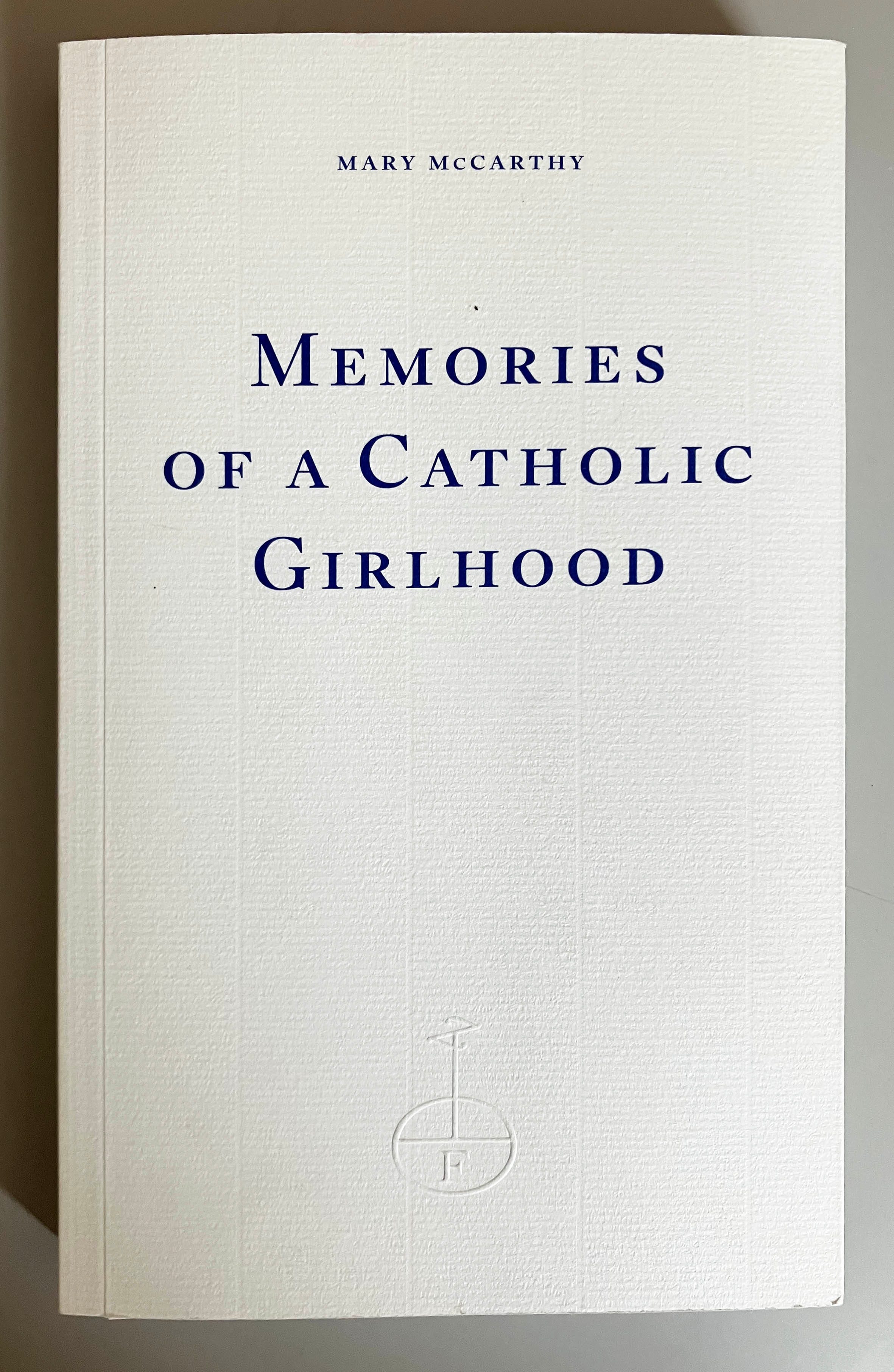
I took one of the new ‘classics’ series to read on a summer holiday: Mary McCarthy’s Memories of a Catholic girlhood, first published in 1957 and reissued by Fitzcarraldo this year.


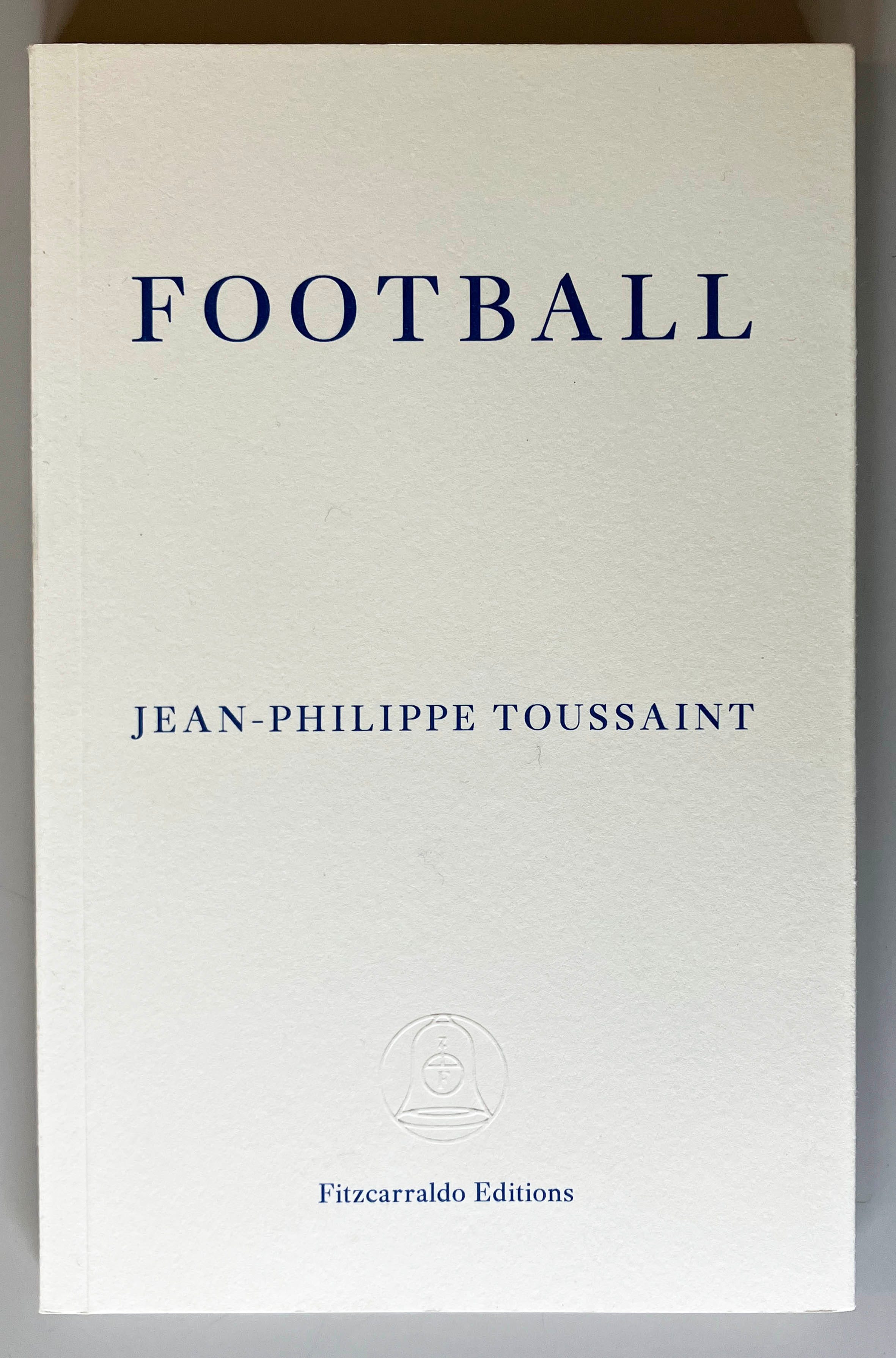
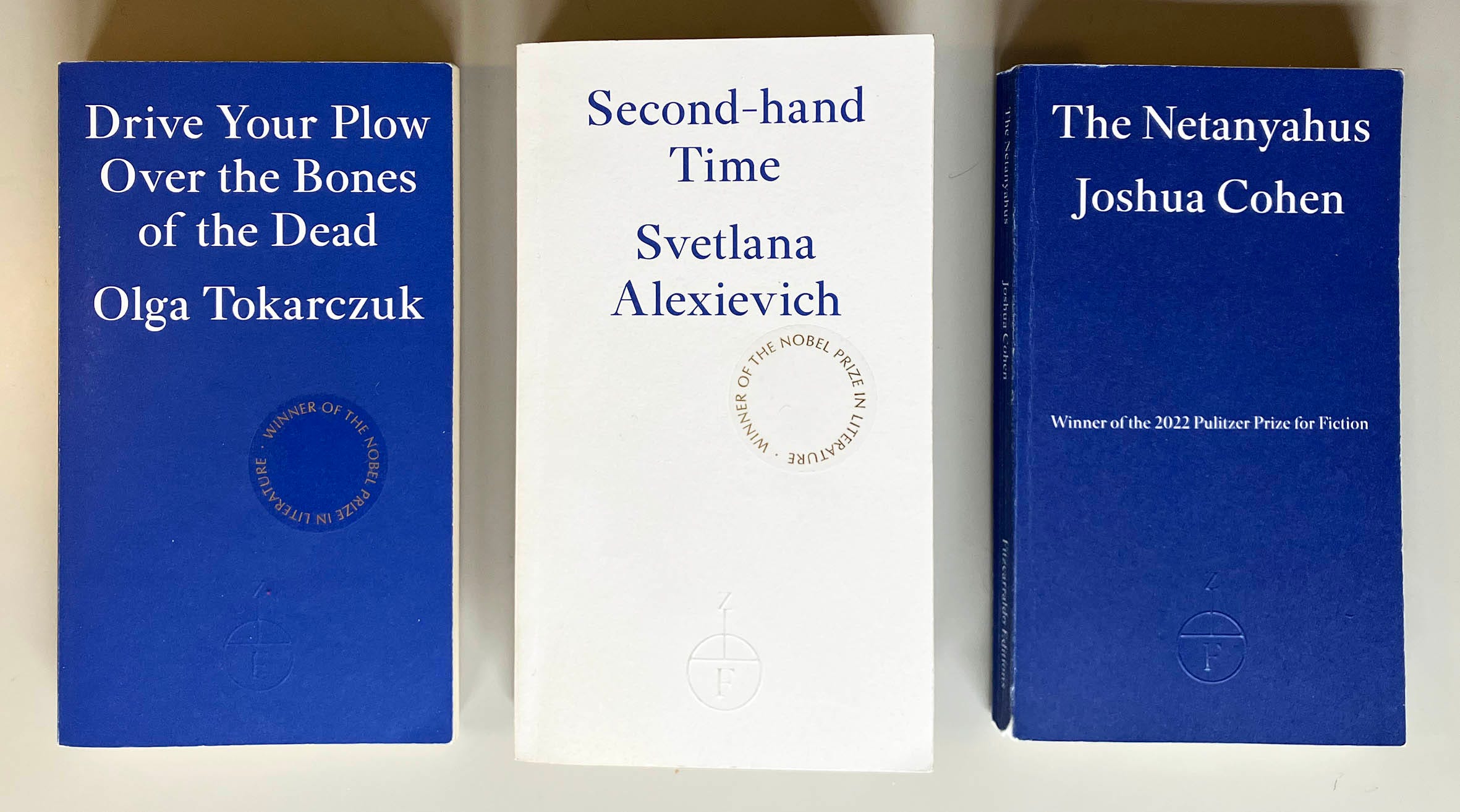
Before then I had read a small sample of Fitzcarraldo’s books: Jean-Philippe Toussaint’s Football (published in 2016 in Shaun Whiteside’s translation of the Éditions de Minuit publication of the year before), Olga Tokarczuk’s Drive your plow over the bones of the dead (paperback edition, 2019), Svetlana Alexievich’s Second-hand time (paperback edition, 2019), Joshua Cohen’s The Netanyahus (2021).
The Fitzcarraldo classics – 11 will have been published this year – are mostly from the twentieth century, and maintain the blend of 50/50 English-language and translated, and 50/50 fiction and non-fiction. Mary McCarthy’s Memories of a Catholic girlhood dates from 1957 – almost 70 years ago, and perhaps far enough away for it to be considered as a classic. McCarthy (1912–89) is, at least in the UK, now in that phase, 30 or so years after her death, of being forgotten, and certainly deserves this re-publication.1 Apart from taking in the extraordinary story of her family and childhood, as I read these pages I became conscious of wonderfully developed sentence structures. For example, quoting almost at random:
‘I ought to go to Montana, said my grandfather decidedly, after he had looked up Judge Bent in a legal directory and found that he really existed: a thing which slightly surprised me, for in my representations to my grandparents, I always had the sensation of lying. Whatever I told them was usually so blurred and glossed, in the effort to meet their approval (for, aside from anything else, I was fond of them and tried to accommodate myself to their perspective), that except when answering a direct question I hardly knew whether what I was was saying was true or false.’ (p. 203)
McCarthy gives some pages to her pleasure in learning Latin, and I think this shows in how she writes English.
Production and design
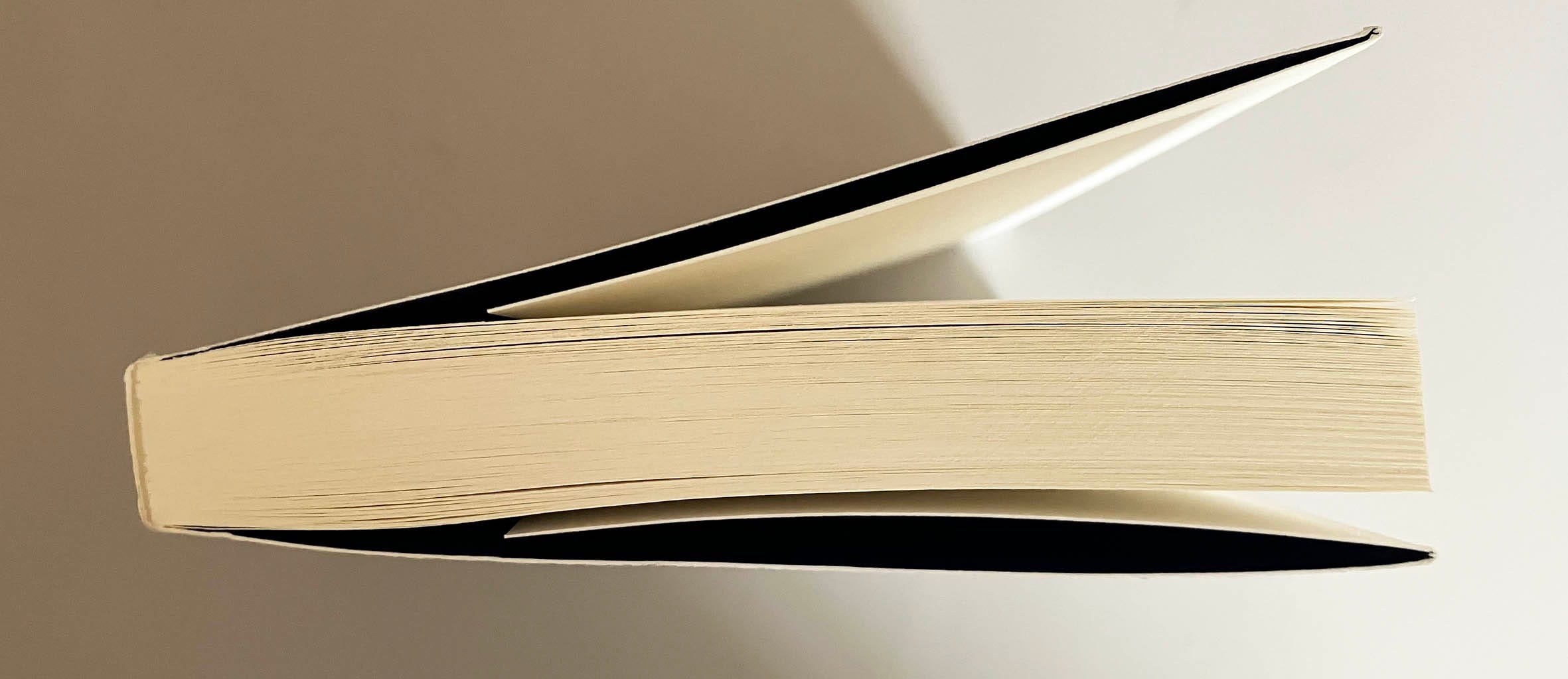
Fitzcarraldo uses printers in the UK, with average results: not the worst, but readers will need to use their hands to keep the books open.
The books were also a design project, and their designer Ray O’Meara is always named in the colophons. The typeface used – Fitzcarraldo – is also his work. I have puzzled about this type. The books consist of simple text, without the need for any partner typeface for captions or headlines. English texts, even those translated from Polish or Japanese, won’t demand much in the way of diacritics or special characters. There are now hundreds of good typefaces that one could use to set such texts, licenses for which can be bought for not much money. So why make another one? It’s also a typeface that, from first seeing it, has seemed to me to be not quite good. Thankfully it is not trying to be beautiful or even distinctive. It is certainly adequate, and passes the easy test of providing rows of black marks that hang together well enough and which let one read without much bother or distraction.
But eventually, reading this book, I saw that the capital letters are where it doesn’t quite work – they are just slightly too large in relation to the lowercase letters, reaching to the top of the ascender line.
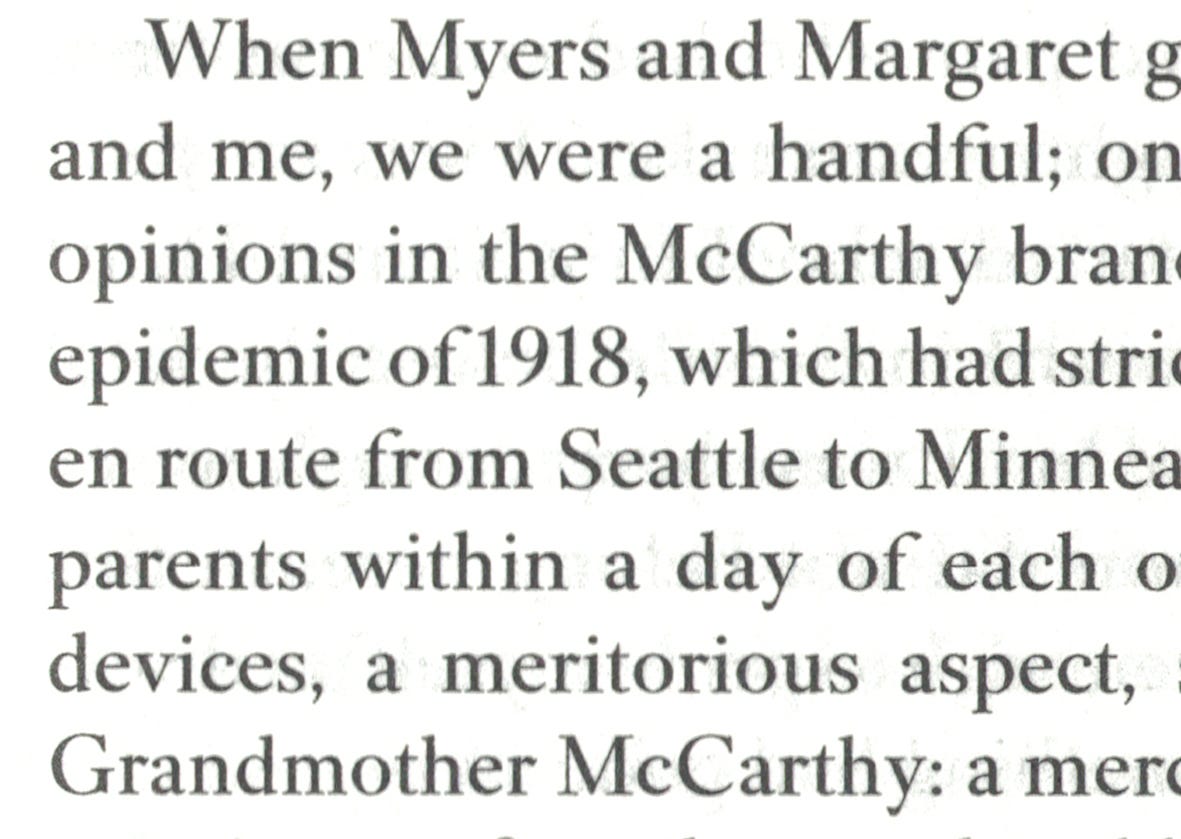
The lesson from hundreds of years of designing and making type for Latin-alphabet characters is that the height of capital letters needs to be a bit less than the small letters that make up the rest of a word.
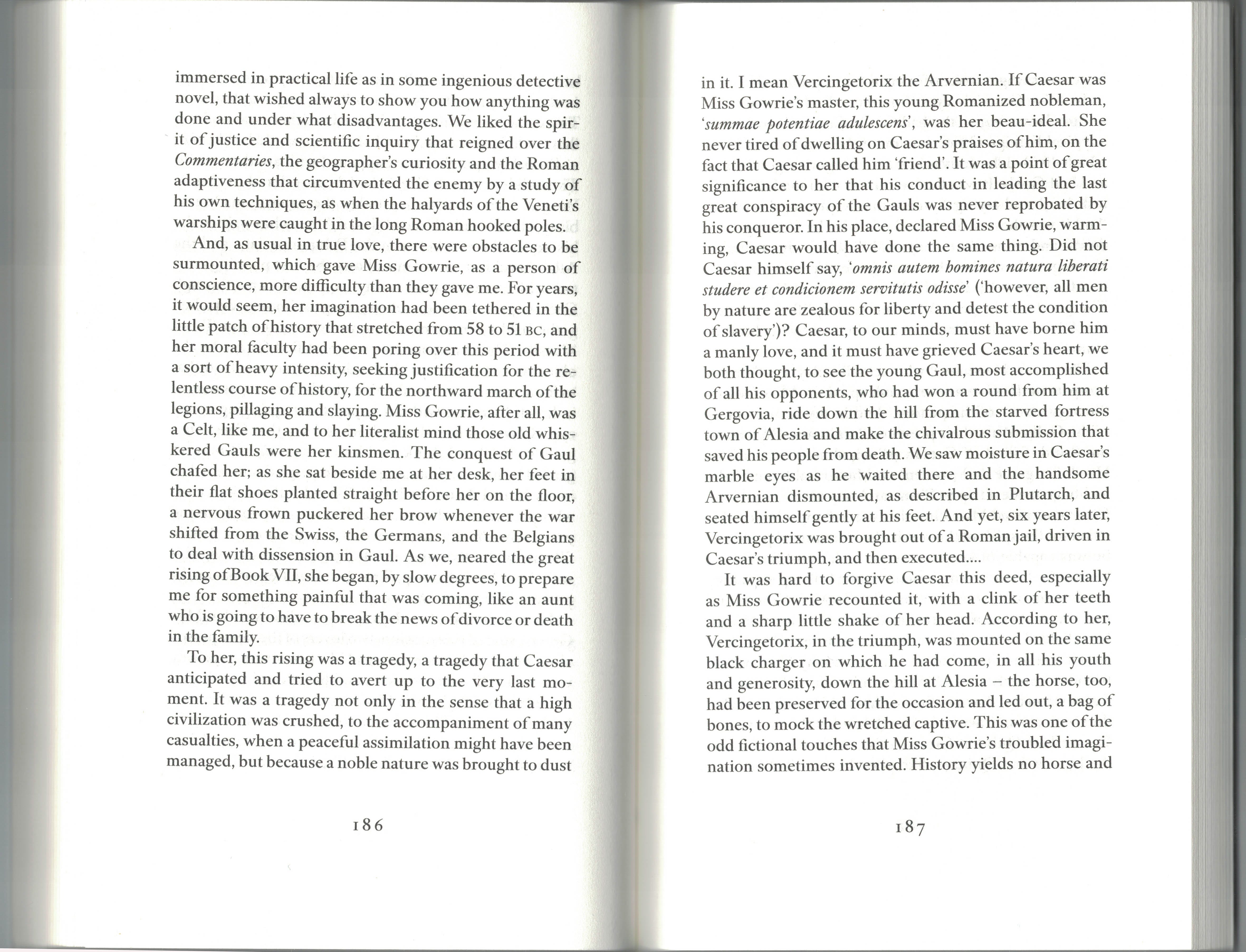
Another detail of the type. In the first Fitzcarraldo books the numerals were all cap-height, but at some point a set of non-lining numerals was added. (Non-lining numerals may rise above or fall below the lowercase x-height of a character set: they then sit more comfortably in text than cap-height numerals do.)
In the McCarthy ‘classics’ edition, the page numbers have non-lining forms but within the text itself, cap-height numerals are used. I suppose that the basis pages for the classics were given non-lining forms for the page numbers, and that, when the text was flowed in for this particular book, no-one thought to check what was going on with its numerals.
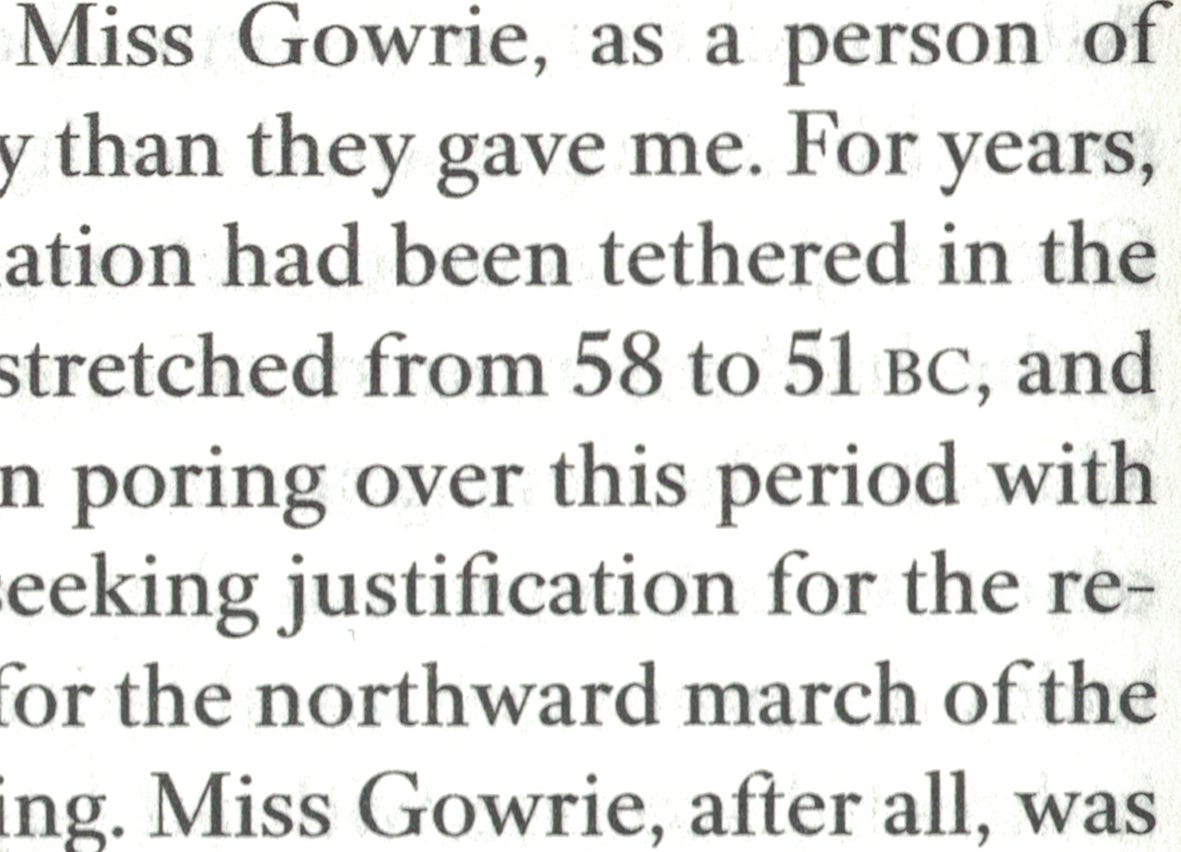
Similarly, one could also discuss the lack of small (x-height) capitals in the Fitzcarraldo type. These could be used within text for acronyms, in post-codes and other such combinations of characters. These need to be specially made – capitals that are simply reduced to x-height heights look too thin.
The French models


All-in-all, and certainly by comparison with its French models, whose design is self-effacing, without pretence, and looser, the Fitzcarraldo books, and especially their covers and title pages, look stiff and tight-lipped. (The upper- and lowercase style on the covers and title-pages of the paperback editions works better.) The moral must be that they still do order these things better in France.
I have memories from the late 1960s of Mary McCarthy’s quite frequent appearances on British television, appearing on an upmarket quiz show, in which a panel of writers were read a passage from a book and were invited to name the writer. I remember especially her smile, appearing while she made to-the-point criticisms, sometimes devastatingly. Looking on Youtube, one can find an excerpt from a panel discussion on the question ‘Do repressive systems produce greater literature?’ in which McCarthy and Joseph Brodsky contest this notion with George Steiner; in the chair is the writer Al Alvarez. This is from 1982, broadcast on Channel 4 in its early, experimental days. McCarthy’s smile is well captured.