Otabind
an explanation and some history

I have two Substack posts in preparation and which should be posted in the coming few days. Both of them refer to books that have been bound with the Otabind technique. There seems still to be some mystery about this process – for example, there is no Wikipedia entry for it yet. So this is what I found out about it some years ago (adapted from a post on the Hyphen Press website).1
Binders have always developed special methods. One important idea of recent years has been the paperback whose block is held away, at the spine, from the cover sheet. The potential virtues of the paperback and the hardback are thus combined: a soft cover, but with a cover that at its spine does not have to undergo the book-block’s flexing. In Europe, one such method was invented by the Finnish company Otava, the large publishing and printing firm that dates originally from 1890, when it was founded as a vehicle to aid the emerging Finnish national spirit. (There is material evidence here for the famous thesis of Benedict Anderson, in his book Imagined communities, that printing and its artefacts became a means for a nation to find and identify itself.)
Otava came to develop its own binding method for schoolbooks, which needed to be both cheap in materials and to lie open easily on tables and desks. The book-block is fixed to a thin sheet of paper, which in turn is fixed at its sides to a cover, which is scored at least twice on each side. This technique has come to be known as Otabind.
In the 1980s Otava granted a non-monopoly license in this method to the Dutch binder Hexspoor, whose factory is situated in Boxtel in the south of the Netherlands. Hexspoor was then run by Gerard J.P.M.T. Hexspoor, who had taken over the firm from his father (also Gerard), who had founded the company in 1946. For a time Hexspoor named the method ‘Hextrabind’. But when it came to exploiting the license overseas, the younger Gerard Hexspoor formed a new company, Otabind International. The Otabind patent consisted in a description of the method. Müller Martini, the Swiss manufacturer of binding machines, had helped Otava develop the method and now worked together with Hexspoor in its wider application.
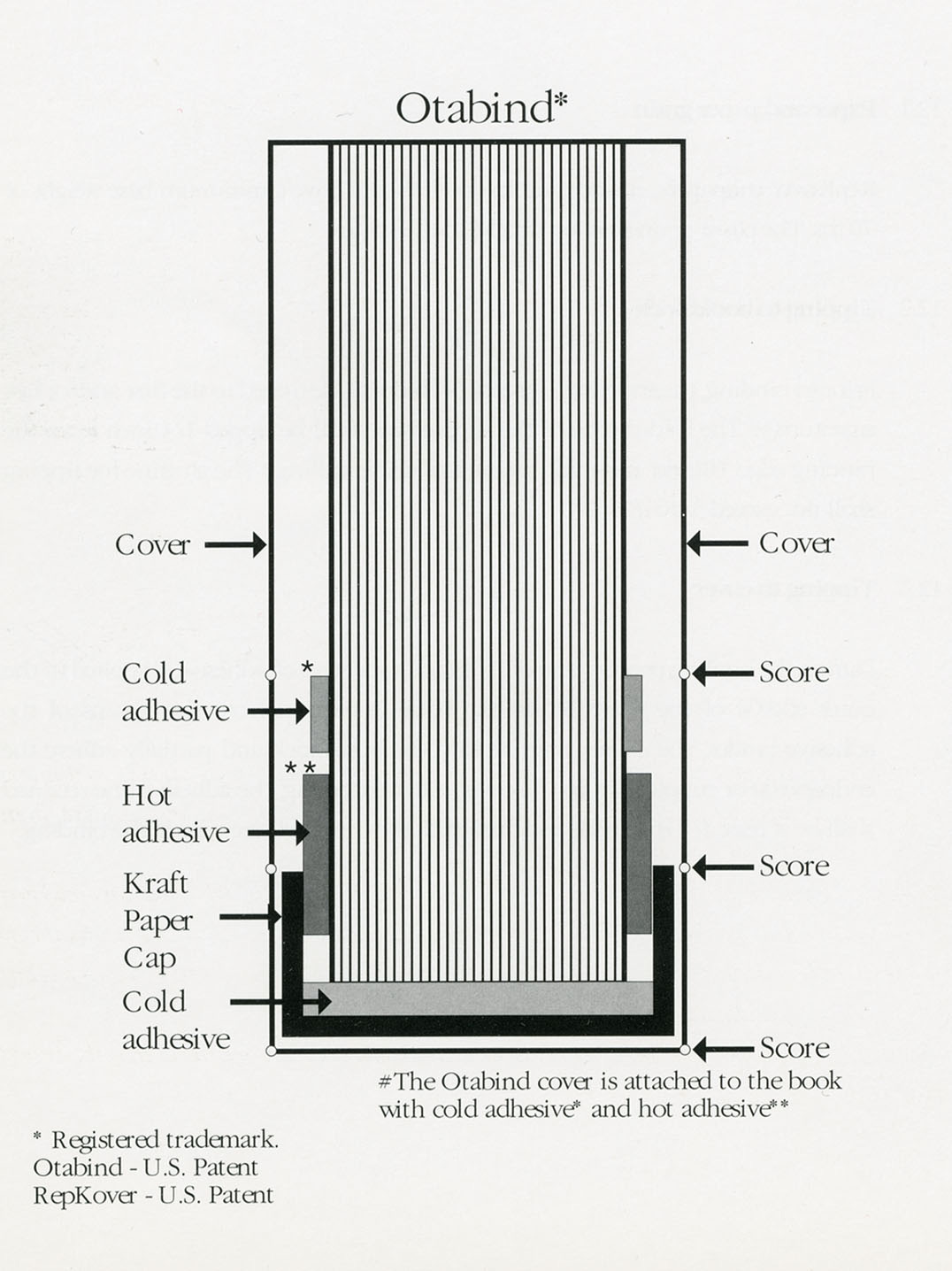
These patents ran for only 10 to 20 years, so the Otabind method is now free for use by any binder open to designing and installing the plant needed to achieve it.
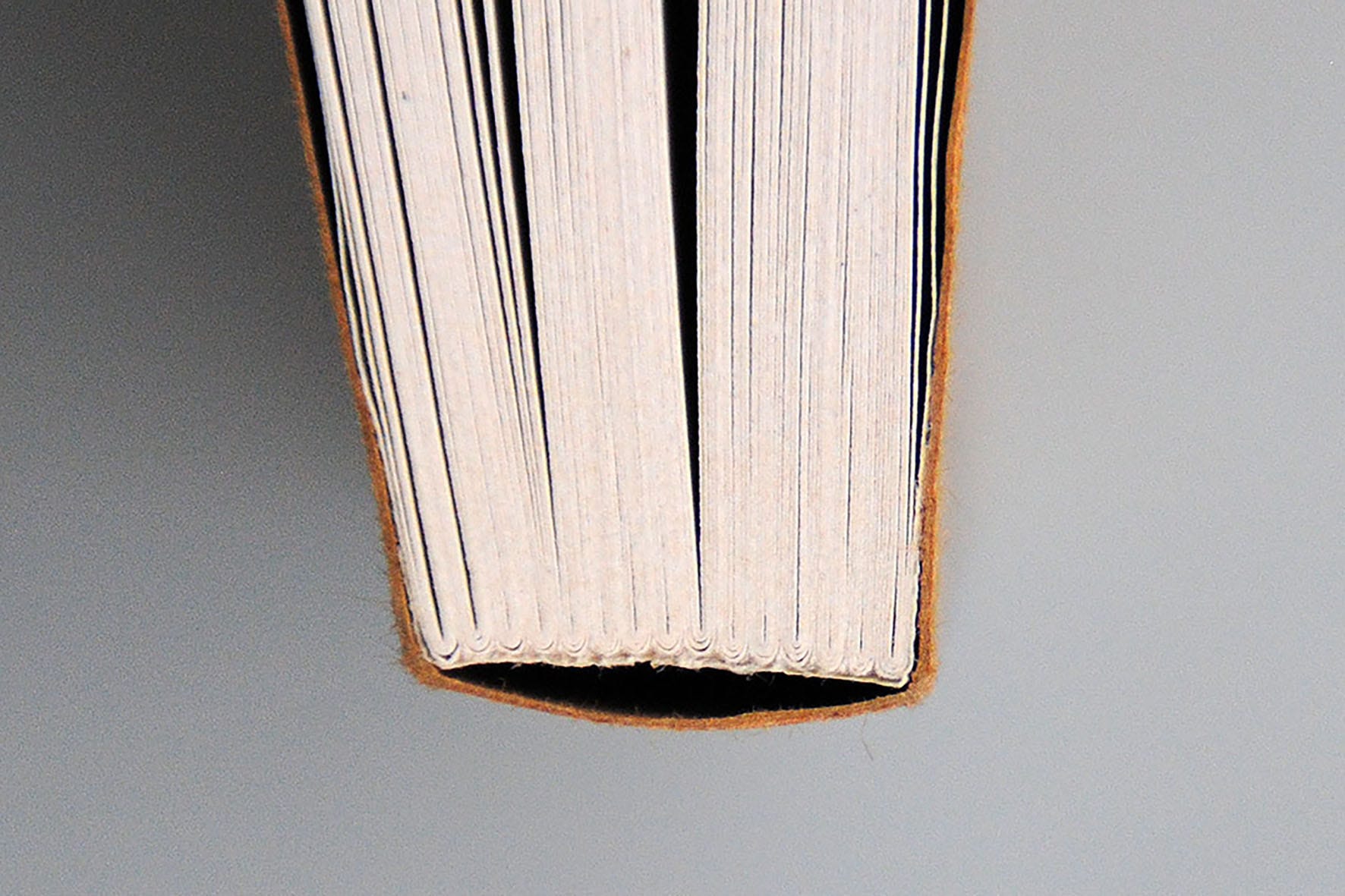
At the same time as Hexspoor was exploiting the Otabind idea, in North America a very similar method was developed, principally by Werner Rebsamen, and marketed there. This variant, which added a strip of cloth around the book-block, was given the trade name RepKover (standing for ‘reinforced paperback cover’).
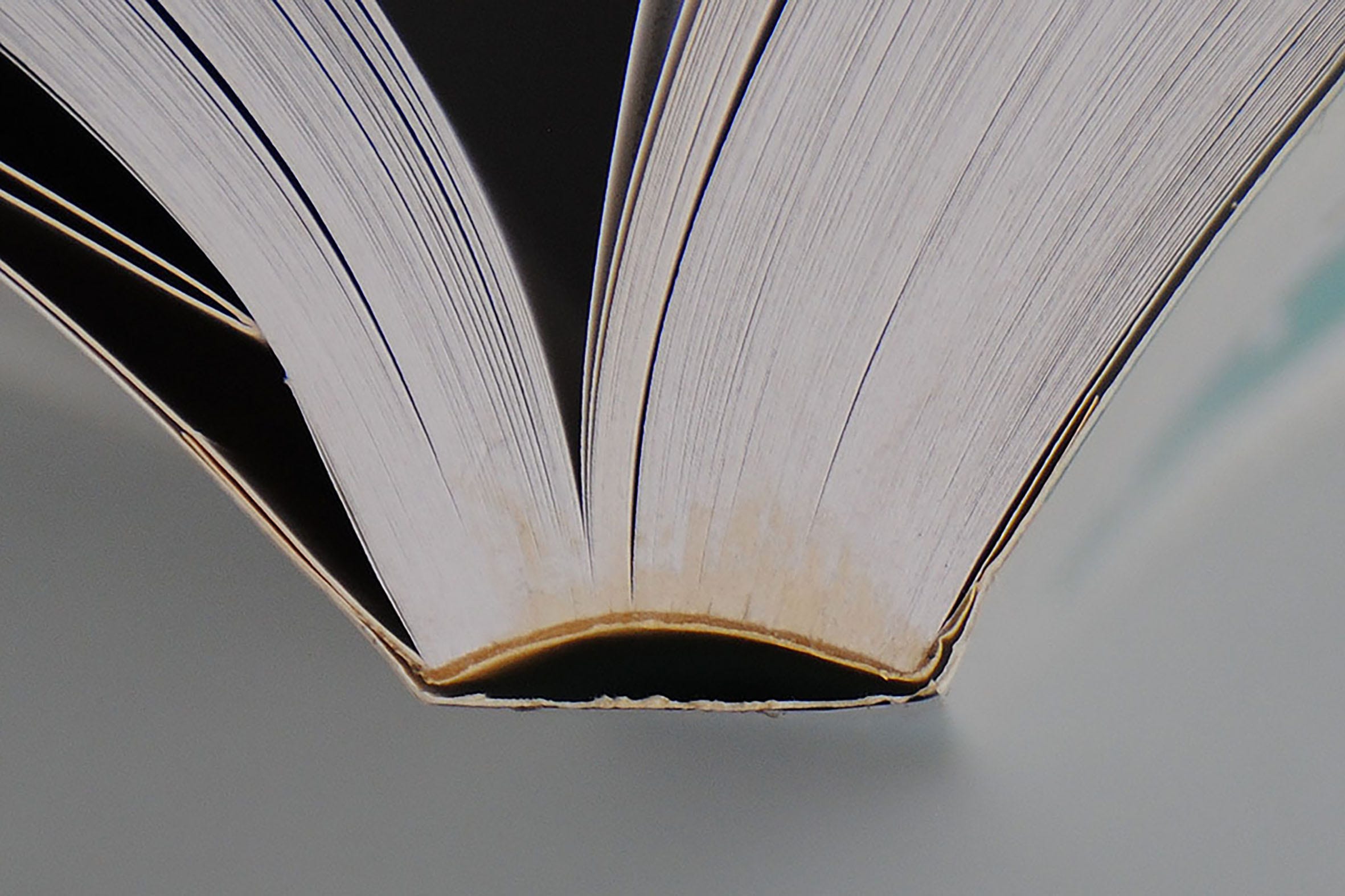
There is no one method or technique that solves all the physical problems of keeping the leaves of a book together and of letting them be opened out to be read easily. Though clearly some ways of holding the leaves together are better than others.
Otabind is not in itself a desirable binding method. Adhesive is the crucial factor. Otabind with the pages cold-glued at the spine – whether the leaves are perfect-bound or thread-sewn in sections – will always work much better than Otabind with hotmelt at the spine (perfect-bound or sewn). So too a cold-glued paperback (perfect-bound or sewn) has this great advantages over an Otabind book whose leaves have been glued at the spine with a stiff hotmelt adhesive.


Some of this history derives from conversations with Silvan Hexspoor, son of Gerard, in 2014 – before he closed the firm’s bindery to turn it into a fulfilment centre.